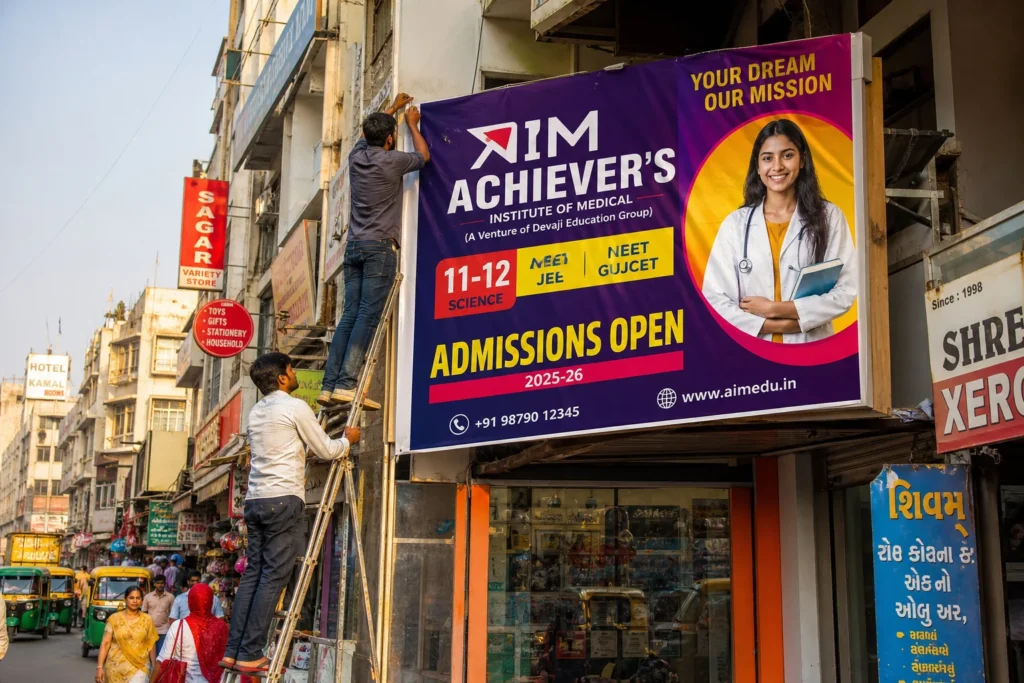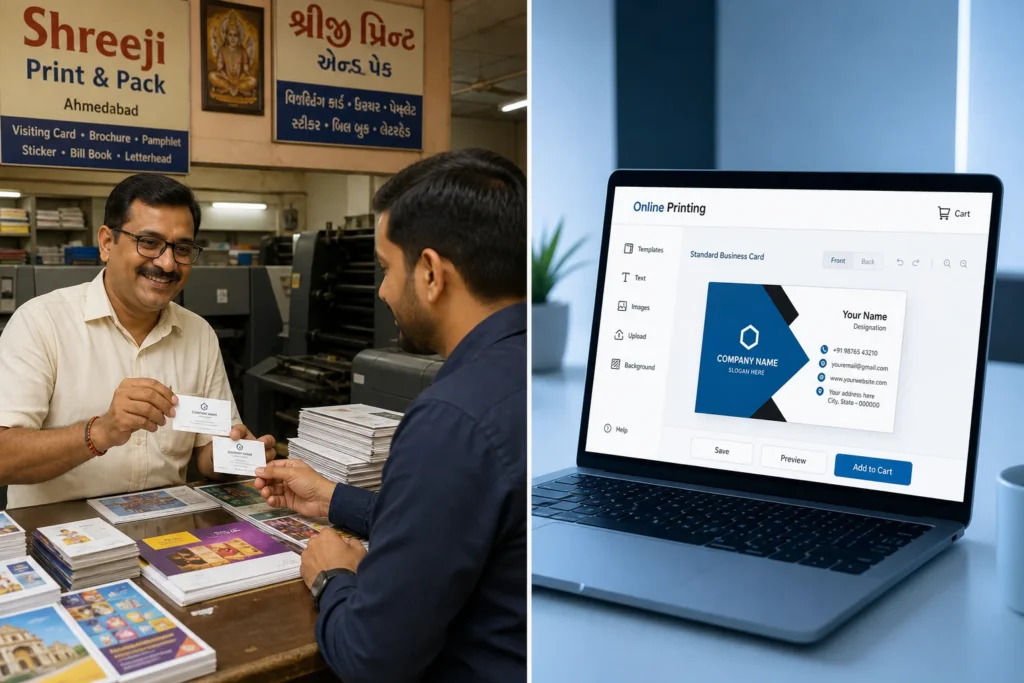
You walk into a print shop, ask for 1000 visiting cards, and get a quote. Then you ask a friend who recently printed the same quantity — and their number is completely different. Sound familiar? Printing cost confuses a lot of people, and for good reason: there’s no single fixed price for any print job. The final number depends on a combination of factors that most buyers never think about until they’re already at the counter.
This guide breaks down every major factor that influences printing cost — from paper weight and finish type to print quantity, design complexity, and turnaround time. Whether you’re a small business owner in Ahmedabad looking to print visiting cards and brochures, or an individual planning event invitations, understanding these factors will help you budget smarter and get better value from every print order.
Why Printing Cost Varies So Much (And Why That’s Normal)
Printing is not a commodity like buying a bottle of water. Every print job is a small manufacturing process. The machine setup, the materials used, the finishing applied, and the time required all contribute to the final printing cost. A basic black-and-white pamphlet and a gold foil visiting card are both “printed materials” — but they involve completely different processes, materials, and skill levels.
The good news is that once you understand what drives the price, you can make smarter choices. You’ll know when to invest in premium finishes and when a simpler option works just as well. You’ll also know how to compare quotes fairly, because a lower quote isn’t always better value, and a higher quote isn’t always overpriced.
Let’s go through each factor one by one.
1. Paper Quality and Stock Weight
The paper (or substrate) you choose is one of the biggest drivers of printing cost. Paper is measured in GSM, grams per square meter. The higher the GSM, the thicker and heavier the paper, and generally, the more premium it feels.
Common Paper Stocks and Their Uses
- 90, 130 GSM: Lightweight paper used for pamphlets, flyers, and internal documents. Cost-effective for high-volume printing.
- 170, 200 GSM: Medium-weight art paper used for brochures, catalogues, and posters. Good balance of quality and cost.
- 300, 350 GSM: Thick card stock used for visiting cards, invitation cards, and premium packaging. Feels substantial and professional.
- 400+ GSM: Ultra-thick stock for luxury business cards and special occasion cards. Higher cost, but exceptional feel.
Beyond weight, the paper surface matters too. Art paper has a coated surface that makes colours pop, ideal for brochures and posters. Matte paper has a non-reflective finish that’s easier to read and write on. Kraft paper gives an earthy, eco-friendly look popular for boutique brands. Each choice affects both the visual result and the printing cost.
2. Print Finish Type: Matte, Gloss, Spot UV, Gold Foil & Embossing
After printing, most materials go through a finishing process. This is where printing cost can increase significantly, but also where your materials can go from ordinary to outstanding. The finish you choose should match the purpose of the material and the impression you want to make.
Standard Finishes
- Matte Lamination: A smooth, non-glossy coating that gives a sophisticated, understated look. Popular for visiting cards and brochures. Adds minimal cost.
- Gloss Lamination: A shiny, reflective coating that makes colours appear more vibrant. Common for posters and brochures. Slightly higher cost than matte.
Premium Finishes
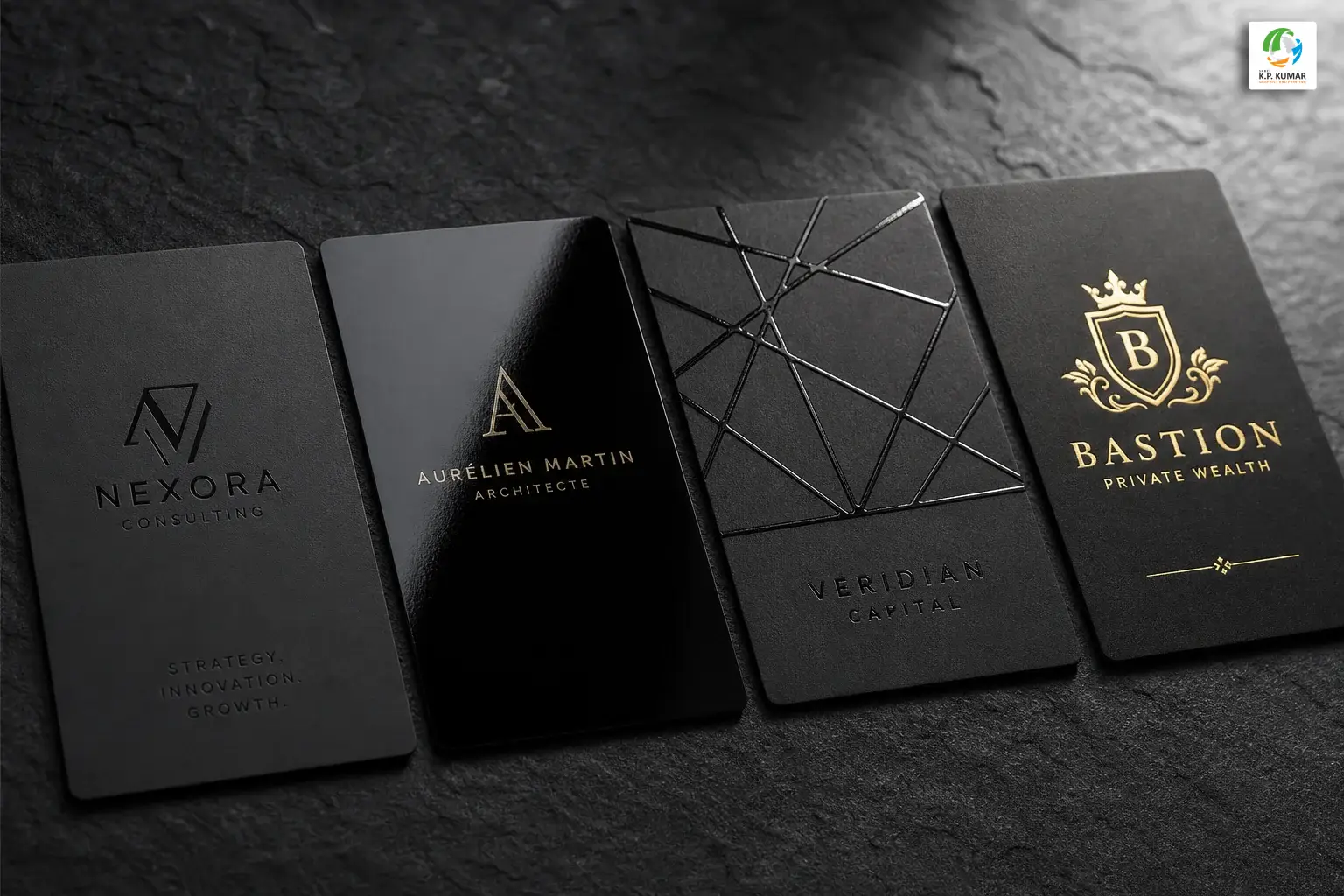
- Spot UV: A clear, high-gloss coating applied to specific areas of the design, like a logo or headline, while the rest remains matte. Creates a striking contrast. Adds a noticeable premium to the printing cost.
- Gold Foil Stamping: A metallic foil pressed onto the surface using heat and pressure. Gives visiting cards and invitation cards a luxury feel. One of the higher-cost finishes, but extremely effective for premium branding.
- Embossing / Debossing: Raises (emboss) or recesses (deboss) a design element into the paper, creating a 3D tactile effect. Often combined with foil for maximum impact. Adds to both cost and perceived value.
To put it simply: a standard matte visiting card and a gold foil embossed visiting card can have very different printing costs, even if the paper size and quantity are identical. The finish is often what separates a forgettable card from one that gets kept.
Pro Tip: Not every material needs a premium finish. Use gold foil or spot UV for visiting cards and invitation cards where first impressions matter most. For pamphlets and flyers that are distributed in bulk, a standard gloss or matte finish keeps your printing cost manageable.
3. Print Quantity: How Volume Affects Your Per-Unit Printing Cost
This is one of the most important, and most misunderstood, aspects of printing cost. Every print job has a fixed setup cost: loading the machine, calibrating colours, preparing plates (for offset printing), and running test prints. This setup cost is the same whether you print 50 copies or 5,000 copies.
That’s why the per-unit printing cost drops dramatically as quantity increases. The setup cost gets spread across more units, making each individual piece cheaper to produce.
A Practical Example: Visiting Cards
- 100 cards: High per-unit cost because setup is spread over fewer pieces.
- 500 cards: Per-unit cost drops significantly. This is the most popular quantity for a reason.
- 1,000 cards: Per-unit cost is at its lowest. Ideal for businesses that distribute cards regularly.
The same logic applies to brochures, pamphlets, posters, and banners. If you know you’ll need more materials over the next few months, it almost always makes financial sense to print a larger quantity now. The total printing cost will be higher, but the cost per piece will be much lower.
Short runs (under 50 copies) are often disproportionately expensive because the setup cost is unavoidable. If you only need a handful of copies, digital printing is usually the most cost-effective option, but even then, planning ahead and printing slightly more than you immediately need is a smart strategy.
4. Material Size and Print Area
Size is a straightforward but significant factor in printing cost. Larger materials require more paper, more ink, and more machine time. For flex banners and outdoor signage, pricing is typically calculated per square foot, so a 4×6 foot banner will cost more than a 2×3 foot banner, proportionally.
Standard Sizes vs. Custom Sizes
Standard sizes (A4, A5, A6, standard visiting card dimensions) are more cost-efficient because they fit neatly onto standard print sheets with minimal waste. Custom sizes often result in more paper wastage during cutting, which adds to the overall printing cost. If your design can work within a standard size, it’s worth considering.
Bleed, Trim, and Safe Zones
When you provide a design file, it needs to include a bleed area, a small extension of the design beyond the trim edge. Without proper bleed, you risk white edges appearing on your finished print. Providing correctly set-up files avoids reprints and keeps your printing cost on budget. A good local print shop will guide you through file requirements before you print.
5. Design Complexity and Graphic Design Fees
If you provide a print-ready file, correctly sized, with proper bleed, in the right colour mode (CMYK), your printing cost stays focused on the actual printing. But if you need design work done from scratch, that adds a separate design fee to your total.
Design complexity matters too. A simple two-colour visiting card layout takes far less time than a multi-page brochure with custom illustrations, multiple fonts, and complex layouts. More revisions mean more designer time, which increases cost.
The Advantage of In-House Design Support
One of the biggest advantages of working with a local print shop that has in-house graphic designers is that design and printing are handled together. At Shree KP Kumar in Vastral, Ahmedabad, the design team works directly with the print team, which means fewer errors, faster approvals, and no miscommunication between a separate designer and a separate printer. This integrated approach often saves money compared to hiring a freelance designer and then taking files to a printer separately.
For businesses in Ahmedabad that need complete branding collateral, visiting cards, letterheads, brochures, and signboards, having one vendor handle both design and printing simplifies the process and keeps the overall printing cost predictable.
6. Turnaround Time and Urgency Pricing
Need your materials by tomorrow? That’s possible, but it will cost more. Urgency pricing is a real factor in printing cost at most print shops. When you request an express turnaround, your job gets prioritized on the machine queue, which may mean other jobs are delayed or staff work extended hours. That additional operational cost gets passed on to the customer.
Standard vs. Express Turnaround
- Standard turnaround (3, 7 working days): Best pricing, no rush premium. Ideal for planned marketing campaigns and regular stationery orders.
- Express turnaround (24, 48 hours): Higher cost, but available when you genuinely need it. Useful for last-minute event promotions or urgent business needs.
- Same-day printing: Available at some local shops for simple jobs. Carries the highest premium.
The practical advice here is simple: plan ahead. If you know you’ll need banners for an event three weeks from now, order them today. You’ll get better pricing, more time for revisions, and less stress. Online platforms like Vistaprint or Printland add shipping time on top of production time, which means even a “standard” order can take 7, 10 days to arrive. A local print shop in Ahmedabad can often deliver faster at standard pricing, without the shipping wait.
7. Print Type and Technology Used
Not all printing is done the same way. The technology used to produce your materials affects both the quality and the printing cost. Understanding the difference helps you ask the right questions when getting a quote.
Digital Printing
Digital printing works like a very high-quality inkjet or laser printer. It’s ideal for short runs (under 500 copies), fast turnaround, and variable data printing (where each piece has different information, like personalised invitations). Setup costs are low, making it cost-effective for small quantities. Most visiting cards, brochures, and posters for small businesses are produced digitally.
Offset Printing
Offset printing uses physical plates and is best suited for large quantities (typically 1,000+ copies). The setup cost is higher, but the per-unit cost drops significantly at scale. Offset printing also produces superior colour accuracy and consistency, important for brand-critical materials. For bulk brochure printing or large pamphlet campaigns, offset printing often delivers the best value.
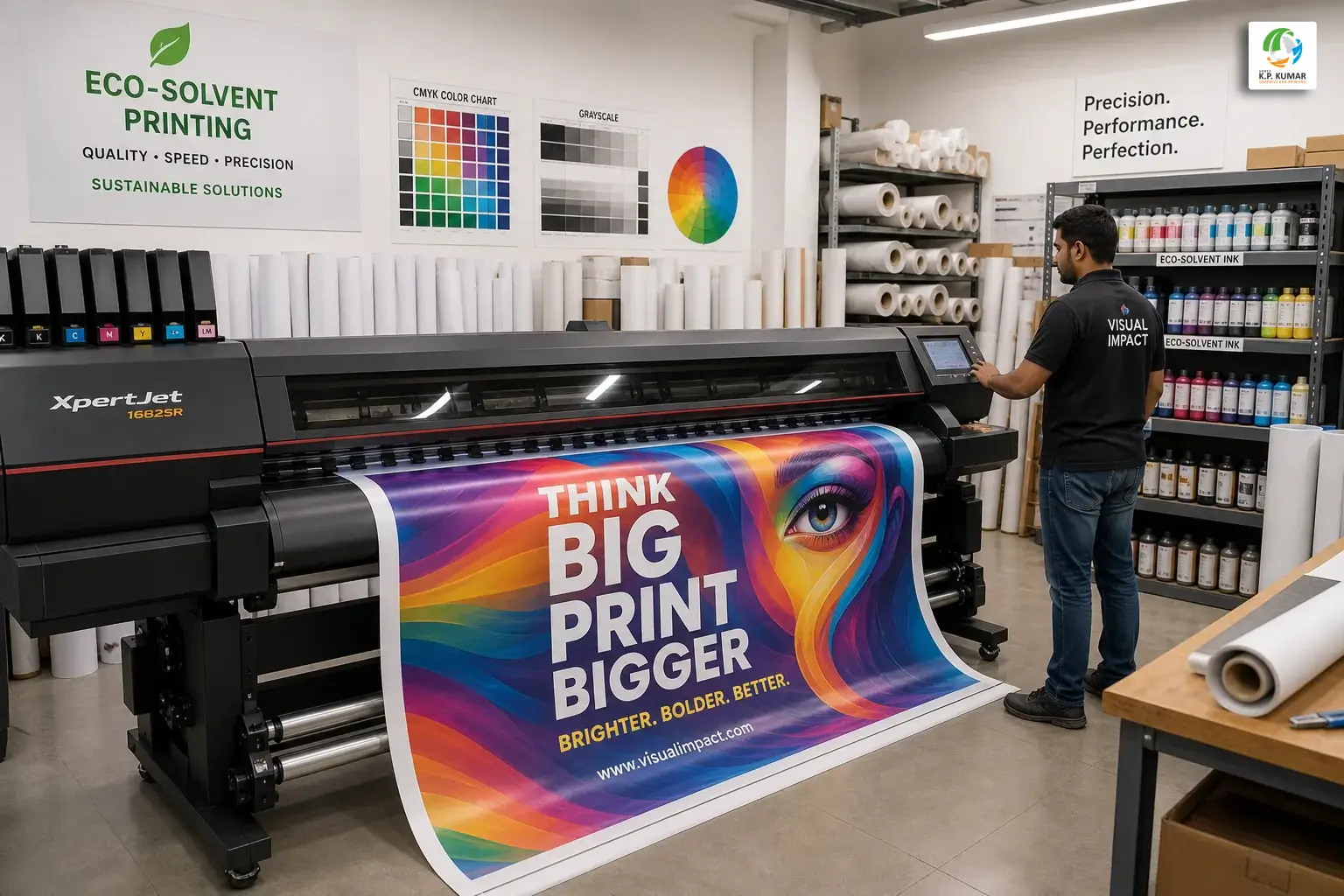
Flex / Eco-Solvent Printing
Used for outdoor banners, flex signs, and large-format displays. Eco-solvent inks are weather-resistant and UV-stable, making them suitable for outdoor use in Ahmedabad’s climate. Pricing is typically per square foot and depends on the material (standard flex, backlit flex, vinyl) and the resolution required. This is the standard technology for banner printing cost calculations.
UV Printing
UV printing uses ultraviolet light to instantly cure inks, producing vibrant, durable prints on a wide range of surfaces, including acrylic, wood, metal, and rigid boards. Used for premium signboards, acrylic displays, and specialty items. Higher cost than standard digital printing, but the results are exceptional.
Printing Cost Breakdown by Product: A Quick Reference Guide
To give you a practical sense of how printing cost varies by product, here’s a general overview. Note that actual prices depend on the specific factors discussed above, quantity, finish, size, and design complexity. Always contact your print shop for an accurate quote.
-
Visiting Cards / Business Cards: Cost varies based on paper stock (300, 350 GSM standard), finish (matte, gloss, spot UV, gold foil), and quantity. Premium finishes significantly increase per-unit cost but are often worth it for client-facing professionals.
-
Flex Banners: Priced per square foot. Larger banners cost more in total but less per square foot at scale. Material quality (standard flex vs. backlit vs. vinyl) also affects the banner printing cost.
-
Brochures: Cost depends on number of pages, paper weight, fold type (bi-fold, tri-fold, z-fold), and finish. Brochure printing cost increases with page count and premium paper.
-
Pamphlets / Flyers: Generally the most affordable print product. Single-sided or double-sided, A5 or A4, standard paper. High-volume orders bring the per-unit cost down considerably.
-
Posters: Priced by size and material. A3 and A2 posters on art paper are standard. Large-format poster printing on flex or vinyl costs more but is suitable for outdoor display.
-
Signboards: Wide range of costs depending on material (flex, vinyl, acrylic, LED). Size, installation requirements, and finish all factor into the final price.
-
Invitation Cards (Kankotri): Cost depends on paper quality, printing technique, and finishing. Gold foil and embossing are popular for wedding invitations and add to the printing cost per card.
For an accurate quote on any of these products, WhatsApp the Shree KP Kumar team directly with your requirements, quantity, size, finish preference, and whether you have a ready design file. You’ll get a clear, itemised quote with no surprises.
Local Print Shop vs. Online Platforms: What the Printing Cost Comparison Really Looks Like
Online printing platforms often appear cheaper at first glance. But the full printing cost picture is more nuanced than the headline price suggests.
The Hidden Costs of Online-Only Platforms
- Shipping charges: Added on top of the print price, often making the total comparable to or higher than a local shop.
- Design fees: Platforms like Vistaprint charge extra for design assistance or offer only template-based options with limited customisation.
- Revision costs: Getting a proof wrong and needing a reprint means paying again, plus waiting for another shipping cycle.
- Quality inconsistency: Without seeing a physical proof, colour accuracy and paper quality can differ from what you expected.
- No premium finishes locally: Platforms like Canva Print don’t offer gold foil, spot UV, or embossing for Indian customers, limiting your options for premium branding.
The Local Print Shop Advantage in Ahmedabad
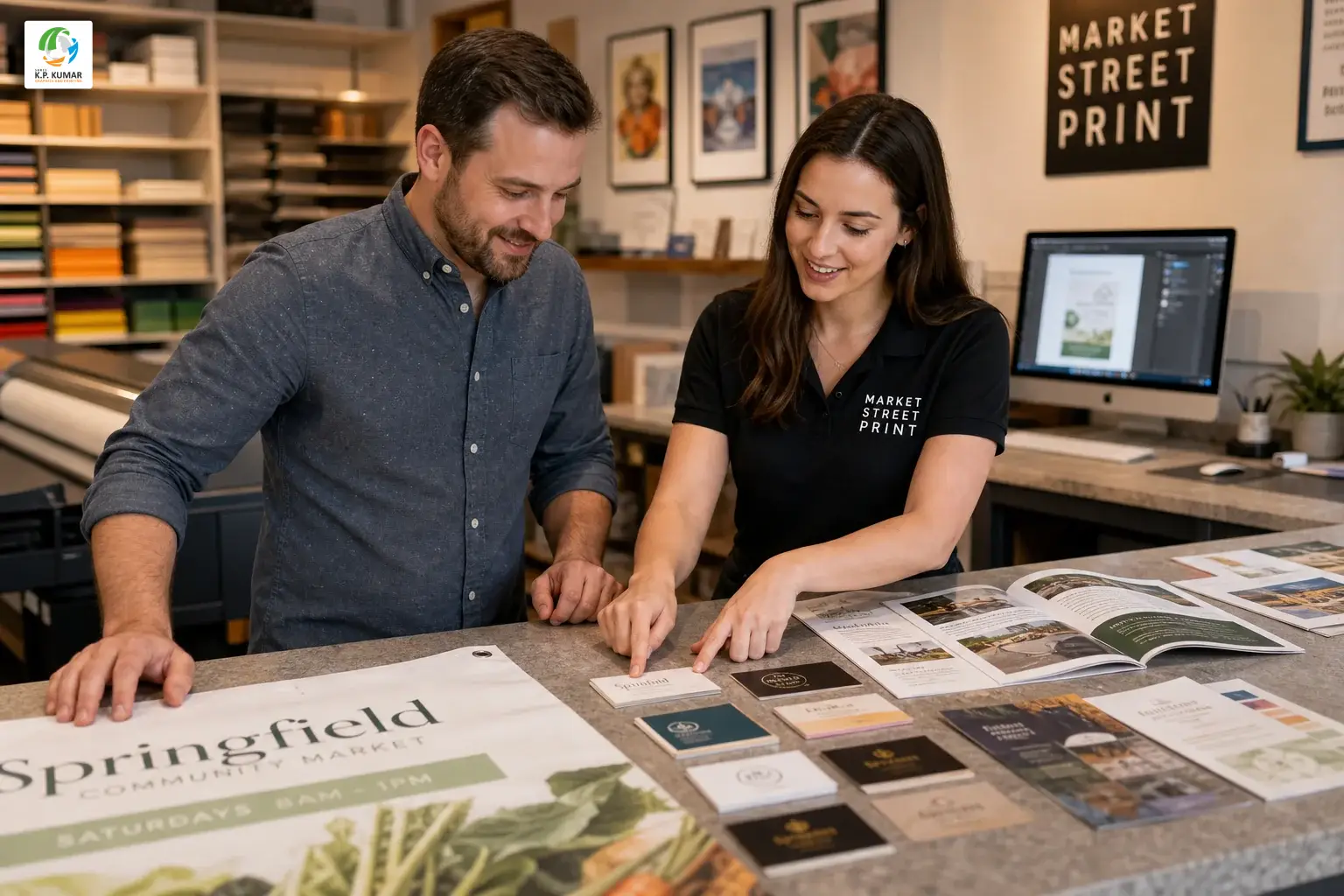
Working with a local print shop like Shree KP Kumar in Vastral, Ahmedabad means you can walk in, see paper samples, discuss your requirements face-to-face, and approve a physical proof before the full run is printed. There’s no shipping cost, no waiting a week for delivery, and no guessing about colour accuracy. For businesses in Vastral, Odhav, Amraiwadi, and surrounding areas, this local advantage translates directly into saved time, reduced risk, and often a lower total printing cost when all factors are considered.
With over a decade of experience, 13,000+ clients served, and 18,000+ projects delivered, Shree KP Kumar has built its reputation on exactly this kind of reliable, personal service. You can also view the full range of services to understand everything available under one roof, from graphic design and visiting cards to flex banners, signboards, and event printing.
5 Smart Tips to Reduce Your Printing Cost Without Sacrificing Quality
You don’t have to choose between quality and affordability. These practical tips help you get the best value from your printing cost budget.
- Print in bulk whenever possible. The per-unit cost drops significantly with higher quantities. If you know you’ll need visiting cards or brochures over the next 6 months, print them all now. The savings are real.
- Provide print-ready files. If you can supply a correctly formatted CMYK file with proper bleed and trim marks, you avoid design charges entirely. Ask your print shop for a file specification sheet before you start designing.
- Match the finish to the purpose. Not every material needs a premium finish. Use gold foil or spot UV for visiting cards and invitation cards where impact matters. Use standard matte or gloss for pamphlets and flyers that are distributed in large volumes. This keeps your overall printing cost balanced.
- Stick to standard sizes where possible. Custom sizes create paper wastage and increase cutting costs. Standard sizes (A4, A5, A6, standard card dimensions) are optimised for print sheets and keep costs down.
- Plan ahead and avoid rush orders. Urgency pricing can add a meaningful premium to your printing cost. Order at least 5, 7 days before you need your materials. For large campaigns or events, 2, 3 weeks is even better.
Frequently Asked Questions About Printing Cost
Does colour printing cost more than black and white?
Yes, full-colour (CMYK) printing uses more ink and requires more precise calibration than black-and-white printing. For most marketing materials, visiting cards, brochures, banners, full colour is standard and worth the additional cost. Black-and-white printing is mainly used for internal documents, bill books, and simple forms where colour isn’t necessary.
How is flex banner printing cost calculated?
Flex banner printing cost is typically calculated per square foot. The total price depends on the banner’s dimensions, the material used (standard flex, backlit flex, or vinyl), and whether finishing like hemming or eyelets is included. Larger banners cost more in total but often less per square foot at scale.
Is graphic design included in the printing cost?
This depends on the print shop. Some include basic design in the price; others charge separately. At Shree KP Kumar, in-house graphic design support is available, which means your design and printing are handled together, reducing errors and saving time. If you already have a ready file, you simply pay for printing.
What is the minimum order quantity for visiting cards?
Most print shops have a minimum order quantity (MOQ) for visiting cards, typically starting at 200 cards. Smaller quantities are possible with digital printing but carry a higher per-unit cost. For most small business owners, 1000 cards is the sweet spot between cost and practicality.
How do I get an accurate quote for my print job?
The most accurate way to get a printing cost quote is to share your specific requirements: the product type, quantity, size, paper preference, finish type, and whether you have a design file ready. The more detail you provide, the more accurate the quote. You can call Shree KP Kumar at 09714998311 or send your requirements via WhatsApp for a quick, detailed quote.
Does brochure printing cost more than pamphlet printing?
Generally, yes. Brochures use heavier paper stock, involve more complex folding, and often include premium finishes, all of which increase the brochure printing cost compared to a simple single-sheet pamphlet. However, brochures also deliver more information and a more professional impression, making them worth the investment for product catalogues, service menus, and company profiles.
Make Every Rupee Count on Your Next Print Order
Understanding printing cost isn’t just about finding the cheapest quote, it’s about knowing what you’re paying for and making choices that deliver real value. Paper quality, finish type, quantity, size, design complexity, turnaround time, and print technology all play a role. When you understand these factors, you can budget confidently, avoid unnecessary expenses, and invest in the right places to make your printed materials work harder for your business.
For businesses and individuals across Ahmedabad, whether you need visiting cards for a new venture, flex banners for a shop launch, brochures for a marketing campaign, or invitation cards for a special occasion, Shree KP Kumar in Vastral offers the full range of printing and design services under one roof. With experienced in-house designers, premium finishing options, and a track record of 13,000+ satisfied clients, you get quality you can see and service you can trust.
Ready to get a clear, honest quote for your next print job? WhatsApp the Shree KP Kumar team today with your requirements and get a detailed printing cost breakdown, no guesswork, no hidden charges. If you’d like to explore the full range of services first, visit the services page to see everything available.