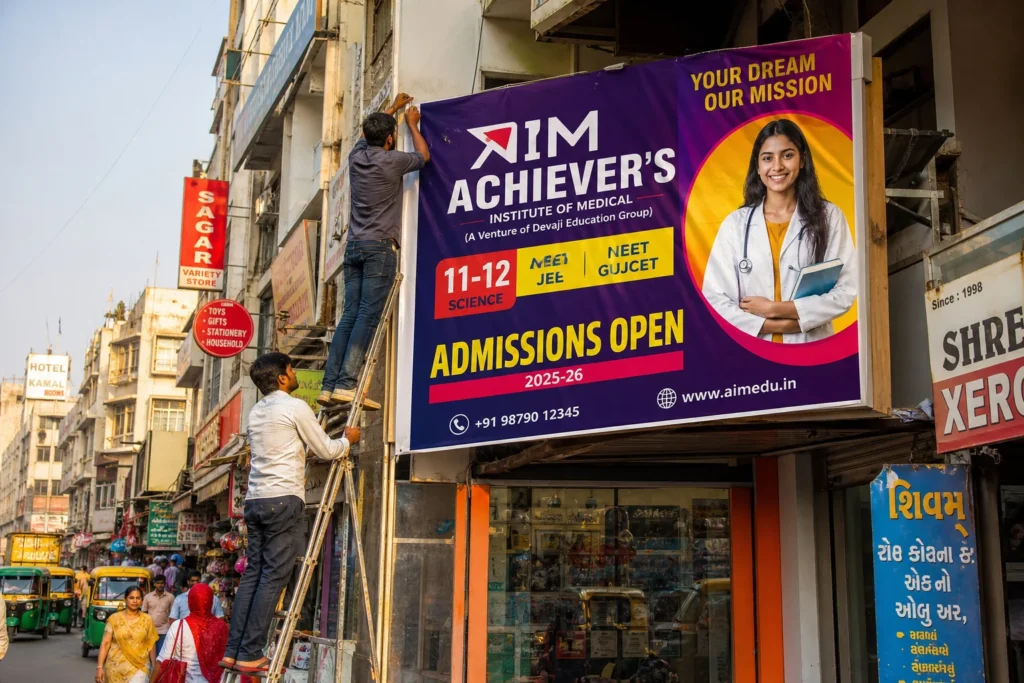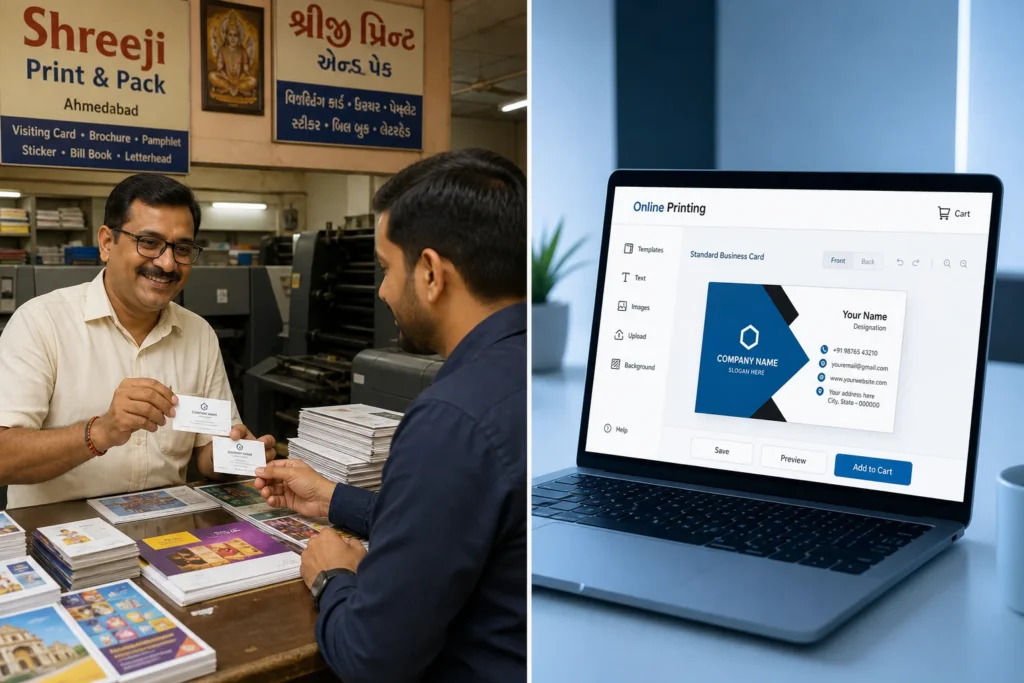
Scroll through any WhatsApp group for local businesses in Ahmedabad and you’ll find the same question posted at least once a week: “Can anyone recommend a good graphic designer?” The replies pour in — names, numbers, portfolio links — but nobody tells you how to actually evaluate the options in front of you. So you pick someone based on price or a friend’s recommendation, and sometimes it works out. Sometimes it doesn’t.
A poor design choice doesn’t just look bad. It can delay your shop launch, force a costly reprint, or send the wrong message to your customers before you’ve even had a chance to speak to them. Whether you need a logo, visiting cards, a flex banner, or a full branding package, the designer you choose will shape how your business is perceived every single day.
This guide walks you through 8 essential qualities to evaluate before you hire a graphic designer — so you can make a confident, informed decision rather than an expensive guess.
Why Choosing the Right Graphic Designer Matters More Than You Think
Most business owners treat design as a one-time task: get a logo made, print some cards, move on. But design is actually an ongoing investment. Every printed material you hand out, a visiting card, a brochure, a signboard, is a silent salesperson working on your behalf. When the design is strong, it builds trust instantly. When it’s weak or inconsistent, it raises doubts before you’ve said a word.
The financial cost of hiring the wrong designer is real. Reprinting 1,000 visiting cards because the file had the wrong colour mode, or redoing a flex banner because the resolution was too low, these are avoidable expenses that add up quickly. Beyond money, there’s the time cost: back-and-forth revisions, missed deadlines, and the stress of chasing someone who isn’t responsive.
The good news is that most of these problems are predictable. If you know what to look for before you hire, you can filter out the wrong candidates early and find a designer who genuinely understands your needs. The 8 qualities below are your checklist.
1. A Portfolio That Matches Your Industry and Needs
A portfolio is the most honest thing a designer can show you. It tells you what they’ve actually done, not what they say they can do. But the key is to look for relevance, not just volume. A designer with 200 social media posts in their portfolio may not be the right fit if you need a premium visiting card with gold foil finishing or a large-format flex banner for outdoor use.
What to Look for in a Design Portfolio
-
Format variety: Do they show work across different print formats, visiting cards, brochures, posters, banners, logos, signboards?
-
Industry relevance: Have they worked with businesses similar to yours, retail shops, clinics, restaurants, event organizers?
-
Print-ready work: Do the designs look like they were made for print, or do they look like social media graphics that were scaled up?
-
Consistency: Is the quality consistent across projects, or are there a few standout pieces surrounded by weak work?
A red flag to watch for: designers who only show digital mockups but claim to handle print projects. A mockup on a screen can hide resolution issues, colour inaccuracies, and bleed errors that only show up when the file goes to the printer. Ask to see actual printed samples or at least the print-ready files they delivered to clients.
2. Solid Understanding of Print Production
This is the quality that separates a good graphic designer from a great one, at least for businesses that need physical printed materials. Design for print is technically different from design for screens, and a designer who doesn’t understand those differences will cost you money.
Key Print Knowledge a Designer Should Have
- Bleed and safe zones: Print files need a bleed area (typically 3mm on all sides) so that cutting doesn’t leave white edges. Safe zones ensure important content isn’t accidentally trimmed.
- CMYK colour mode: Screens use RGB colour. Printers use CMYK. A designer who submits RGB files will get colours that look noticeably different from what they designed on screen.
- Resolution (300 DPI minimum): Low-resolution images look sharp on screen but pixelated when printed. Any image used in a print file should be at least 300 DPI at the final print size.
- Font embedding and outlines: Fonts must be embedded or converted to outlines in the final file, or the printer may substitute a different font entirely.
- File formats: Print-ready files are typically PDF (with bleed), AI, or EPS, not JPEG or PNG.
A simple way to test a designer’s print knowledge: ask them what colour mode they use for print files, or what bleed setting they apply. A confident, correct answer tells you they know what they’re doing. A vague or confused response is a warning sign.
This matters especially for products like visiting cards, where small errors in file setup can result in colour shifts, blurry text, or cards that get trimmed incorrectly, all of which require a costly reprint.
3. Clear and Responsive Communication
Design is a collaborative process. Even the most talented designer will produce the wrong result if they don’t understand your brief, and even a moderately skilled designer can deliver excellent work if communication is clear and consistent. How a designer communicates is as important as how they design.
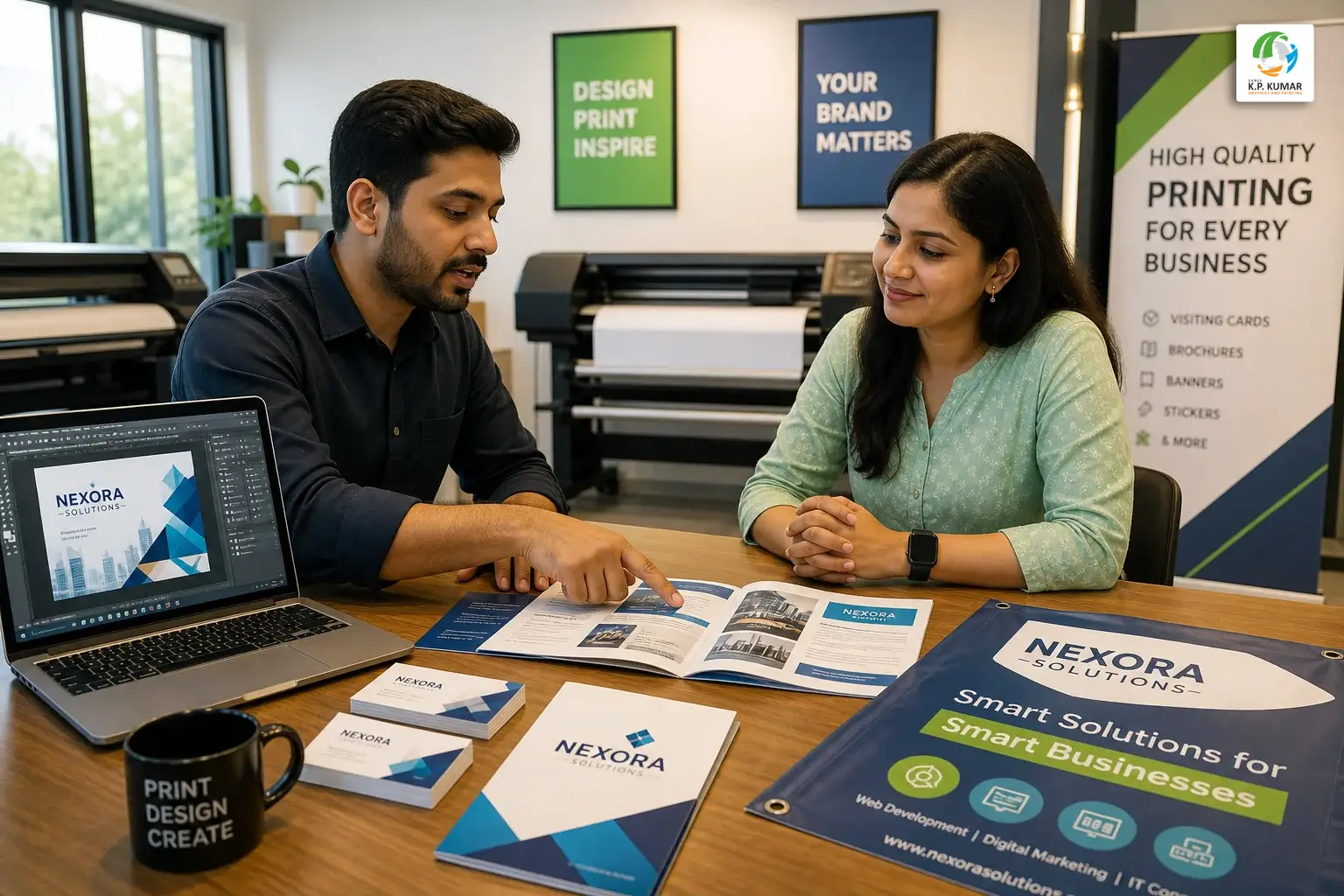
Signs of Good Communication
- They ask detailed questions before starting, about your target audience, competitors, preferred colours, and the purpose of the material.
- They provide a clear timeline with milestones, not just a vague “I’ll send it soon.”
- They confirm the brief in writing (even a WhatsApp message summary counts).
- They explain their design choices when presenting concepts, not just “here’s the design, let me know what you think.”
- They respond within a reasonable timeframe and keep you updated if there are delays.
Red Flags in Designer Communication
- No written confirmation of the project scope or deadline.
- Slow or inconsistent responses during the inquiry stage (this usually gets worse once they have your deposit).
- Defensive reactions to feedback or revision requests.
- Vague answers when you ask about their process or timeline.
For time-sensitive projects, a shop launch banner, an event poster, or a batch of visiting cards before a trade exhibition, poor communication can mean missed deadlines and real business consequences. Always establish clear expectations upfront, and choose a designer who treats communication as part of the service, not an afterthought.
4. A Design Style That Fits Your Brand
Every designer has a natural aesthetic, a visual language they gravitate toward. Some lean toward bold, high-contrast designs with vibrant colours. Others prefer clean, minimal layouts with lots of white space. Neither is better in absolute terms, but one may be far more appropriate for your specific business and audience.
The mistake many business owners make is hiring a designer whose portfolio looks impressive without checking whether that style actually suits their brand. A designer who excels at edgy, modern branding for tech startups may not be the right fit for a traditional family-run textile shop in Vastral that needs warm, trustworthy visuals.
How to Assess Style Fit
- Look at their portfolio and ask yourself: would my target customers respond positively to this aesthetic?
- Share 3-5 examples of designs you like and ask the designer if they can work in that direction.
- Ask whether they’ve worked with businesses in your sector before, retail, healthcare, hospitality, events, etc.
- Check whether their work shows range. A designer who can adapt their style to different briefs is more valuable than one who produces the same look for every client.
Style fit matters across every format, from a logo and visiting card to a brochure or outdoor signboard. When your printed materials look consistent and appropriate for your audience, they build brand recognition over time. When they look mismatched or generic, they blend into the background.
5. Realistic Turnaround Times and Reliability
Deadlines are non-negotiable in the print world. If your Diwali sale banner isn’t ready before the festival, it’s useless. If your visiting cards aren’t printed before the trade exhibition, you’ve missed the opportunity. A graphic designer who consistently delivers late, regardless of how talented they are, is a liability for any business that operates on real-world timelines.
How to Set Clear Turnaround Expectations
- Always state your hard deadline upfront, not just your preferred date.
- Ask the designer to confirm the deadline in writing before work begins.
- Build in buffer time: if you need the final print file by Thursday, tell the designer Tuesday is the deadline.
- Ask how many active projects they’re handling, a designer juggling too many clients may not give yours the attention it needs.
- Clarify how many revision rounds are included and how long each round takes.
Reliability also means delivering what was promised, not just on time, but in the right format, at the right quality. A designer who consistently meets deadlines and delivers print-ready files without being chased is worth far more than one who produces beautiful work but requires constant follow-up.
For businesses that regularly need printed materials, seasonal promotions, event banners, updated brochures, working with a reliable designer (or a print shop that has in-house designers) saves enormous time and stress over the long run. You can read more about the advantages of working with a local provider in our guide on local print shops vs. online printing in Ahmedabad.
6. Experience with Local Printing Requirements in Ahmedabad
This quality is specific to businesses in Ahmedabad, and it matters more than most people realise. A designer who understands the local print landscape can save you significant time, money, and frustration.
Local printing in Ahmedabad has its own context. Flex banners for outdoor use need to be designed for eco-solvent printing on specific material widths. Signboards in areas like Vastral, Odhav, and Amraiwadi often need to account for local municipal size guidelines. Kankotri (wedding invitation cards) follow specific layout conventions that a designer unfamiliar with Gujarati traditions may not know. Even paper stock availability varies, a designer who knows what’s locally stocked can make recommendations that save you from ordering materials that need to be sourced from outside the city.
Questions to Ask About Local Print Experience
- Have you worked with print vendors in Ahmedabad before?
- Are you familiar with eco-solvent flex printing specifications?
- Can you design for both digital and offset printing?
- Do you know the standard sizes for shop signboards and flex banners used locally?
The most efficient setup for local businesses is working with a designer who is directly connected to a print shop, or a print shop that has in-house designers. This eliminates the file handoff problem entirely: the designer knows exactly what the printer needs, and the printer knows exactly what the designer intended. There’s no room for miscommunication, and turnaround times are significantly faster.
For a deeper look at what goes into outdoor printing in Ahmedabad, our complete guide to flex banner printing in Ahmedabad covers material choices, sizing, and what to expect from the production process.
7. Transparent Pricing and a Clear Revision Policy
Pricing disputes are one of the most common sources of frustration when working with designers. They usually happen for one of two reasons: the scope wasn’t clearly defined upfront, or the revision policy wasn’t agreed upon before work began. Both are avoidable with the right questions asked at the start.
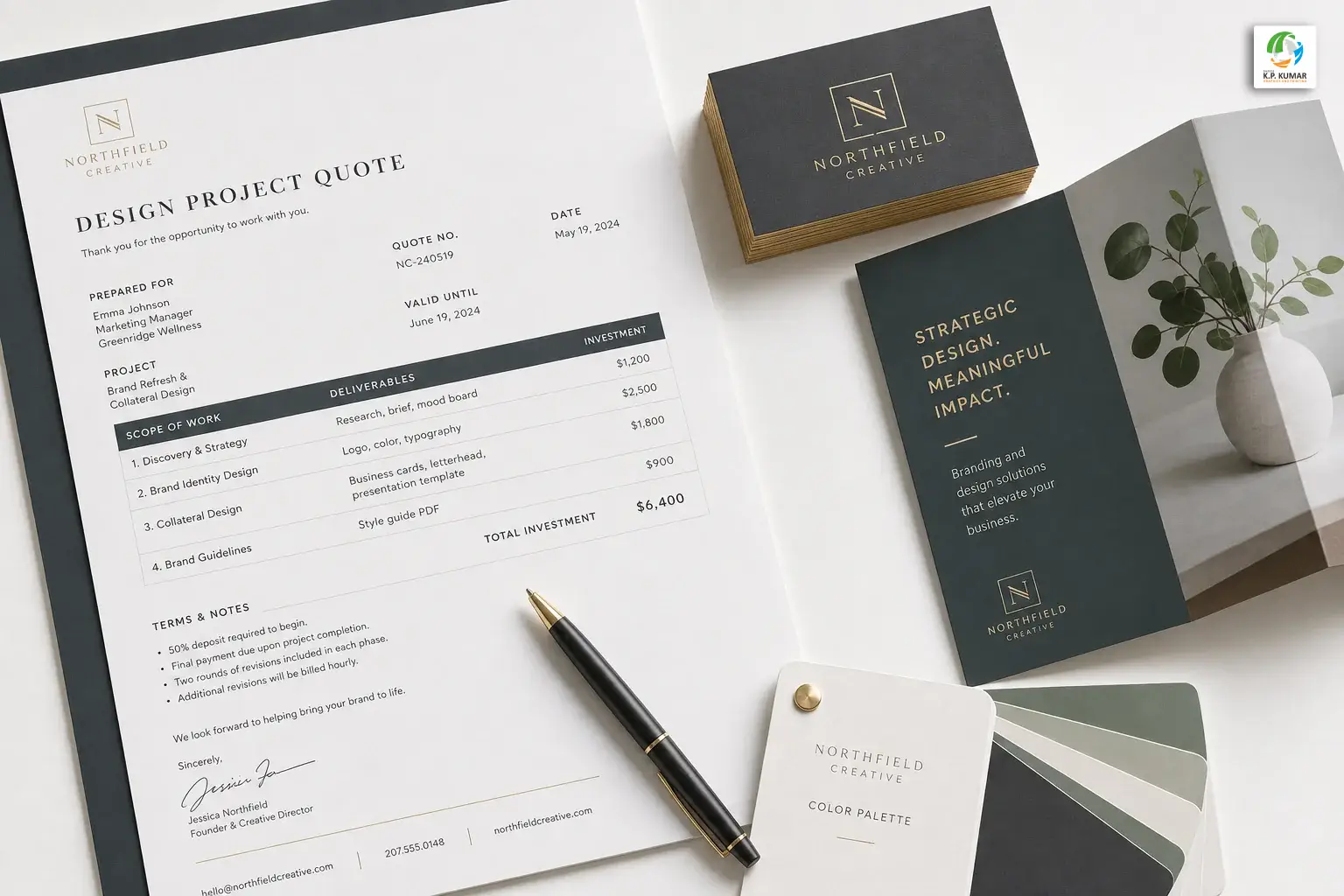
What to Clarify Before Signing Off on Any Design Project
- Project scope: What exactly is included, how many design concepts, how many formats, what file types on delivery?
- Revision rounds: How many rounds of revisions are included? What counts as a revision vs. a new brief?
- Additional charges: Are there extra fees for rush delivery, additional formats, or stock image licensing?
- Payment terms: Is there an upfront deposit? When is the balance due, on delivery of the draft or the final file?
- File ownership: Do you receive the editable source files (AI, PSD, INDD), or just the final exported files?
A designer who is transparent about pricing and scope from the beginning is demonstrating professionalism and respect for your time. One who gives vague quotes and adds charges later is a red flag, regardless of how good their work looks.
When comparing quotes from multiple designers, make sure you’re comparing like for like. A lower quote that includes only one revision round and no source files may end up costing more in the long run than a slightly higher quote that includes full deliverables and two revision rounds.
8. Positive Reviews and Verifiable Client References
Word of mouth has always been the most reliable form of recommendation, and in the age of Google reviews and social media, it’s easier than ever to verify. Before committing to any graphic designer, take ten minutes to look at what their previous clients have said about them.
Where to Look for Designer Reviews
- Google Business Profile: Look for consistent ratings and read the actual text of reviews, not just the star count.
- Social media: Check their Instagram or Facebook page for client tags, testimonials, and comments on their work.
- Direct references: Ask the designer if they can connect you with a previous client in a similar industry. A confident designer will have no hesitation doing this.
- Portfolio context: Ask whether the projects in their portfolio are real client work or self-initiated concept pieces.
What Strong Reviews Typically Mention
- Quality of the final printed output, not just the design on screen
- Responsiveness and ease of communication throughout the project
- Whether deadlines were met
- How the designer handled revision requests and feedback
- Whether they would hire the designer again
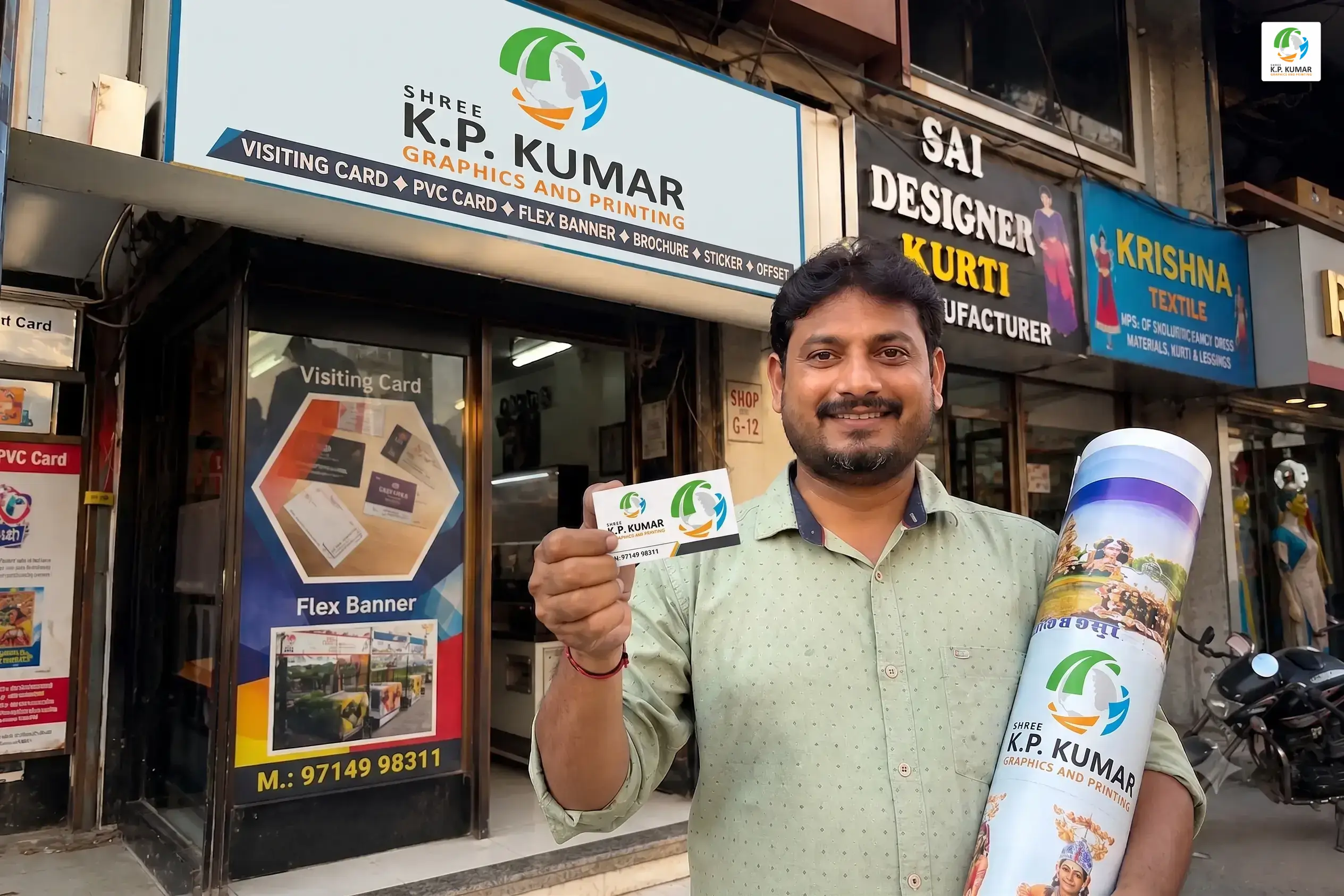
At Shree KP Kumar Graphics and Printing, we’ve served over 13,000 clients across Ahmedabad over more than a decade, and our reviews reflect the relationships we’ve built with local businesses, event organizers, and individuals who come back to us project after project.
Red Flags to Watch Out For When Hiring a Graphic Designer
Even with a checklist in hand, it helps to know the specific warning signs that should make you pause before committing. Here’s a consolidated list of red flags across all 8 qualities:
- No portfolio, or a portfolio with only mockups and no real client work
- Inability to explain basic print terms like bleed, CMYK, or DPI
- Vague timelines with no written confirmation of deadlines
- No written quote or scope document, just a verbal agreement
- Defensive or dismissive responses to feedback during the inquiry stage
- Plagiarized or heavily stock-image-dependent portfolio with little original design work
- Overpromising, “I can do anything you need” without asking any clarifying questions
- No clear revision policy, unlimited revisions sounds good until it means nothing is ever finalized
- No reviews or references, especially concerning for designers who claim years of experience
- Pressure to decide immediately without giving you time to review their portfolio or ask questions
None of these red flags alone is necessarily disqualifying, but a combination of two or more should prompt you to look elsewhere. The right designer will welcome your questions and give you clear, confident answers.
Frequently Asked Questions About Hiring a Graphic Designer
What’s the difference between a graphic designer and a print shop designer?
A graphic designer typically focuses on the creative and conceptual side, developing logos, layouts, and brand identities. A print shop designer is often more technically focused, ensuring files are correctly set up for production. The best scenario for local businesses is working with someone who does both, or a print shop that has in-house designers who understand both the creative and technical requirements.
Do I need a separate designer if I use a print shop?
Not necessarily. Many print shops, including Shree KP Kumar Graphics and Printing, offer in-house graphic design services alongside printing. This means your designer and your printer are the same team, which eliminates file handoff errors, speeds up turnaround, and ensures the final printed output matches the design intent. For most local businesses, this is the most efficient and cost-effective approach.
How many revisions should I expect from a graphic designer?
Industry standard is typically two to three rounds of revisions included in the project fee. Each round should address all your feedback at once, rather than making changes one at a time. If you find yourself needing more than three rounds, it’s usually a sign that the initial brief wasn’t detailed enough, which is why good communication at the start of a project is so important.
Can a local designer handle both design and printing?
Yes, and for businesses in Ahmedabad, this is often the preferred approach. A local provider who handles both design and printing can manage the entire process from concept to delivery, ensure files are correctly prepared for the specific printing method being used, and offer faster turnaround than coordinating between a separate designer and printer. You can explore the full range of services available at Shree KP Kumar’s services page.
What files should I receive after the design is done?
At minimum, you should receive the final print-ready file (PDF with bleed) and a web-friendly version (JPEG or PNG). Ideally, you should also receive the editable source files (AI, PSD, or INDD) so you can make future updates without starting from scratch. Always clarify file deliverables before the project begins, not after.
How do I know if a designer’s quote is fair?
Compare quotes from two or three designers, but make sure you’re comparing the same scope: number of concepts, revision rounds, file formats, and whether source files are included. A lower quote with fewer deliverables may not be the better deal. Our guide on how to choose the right print shop covers similar evaluation principles that apply to design services as well.
Ready to Work with a Designer Who Understands Print?
Finding a graphic designer who ticks all 8 boxes, strong portfolio, print knowledge, clear communication, style fit, reliability, local expertise, transparent pricing, and verified reviews, takes time. But it’s time well spent, because the right designer becomes a long-term partner in building your brand, not just a one-off vendor.
At Shree KP Kumar Graphics and Printing in Vastral, Ahmedabad, our in-house design team works directly with our print production team, which means your visiting cards, flex banners, brochures, signboards, and invitation cards are designed and printed under one roof, with no file handoff errors and no miscommunication. With over a decade of experience and more than 13,000 clients served across Ahmedabad, we understand what local businesses need: quality work, honest pricing, and materials that are ready when you need them.
If you’re ready to get started, or just want to talk through what you need, send us a message on WhatsApp and we’ll respond promptly. Prefer to call? Reach us directly at 09714998311. We’re here to help you make the right decision for your business.